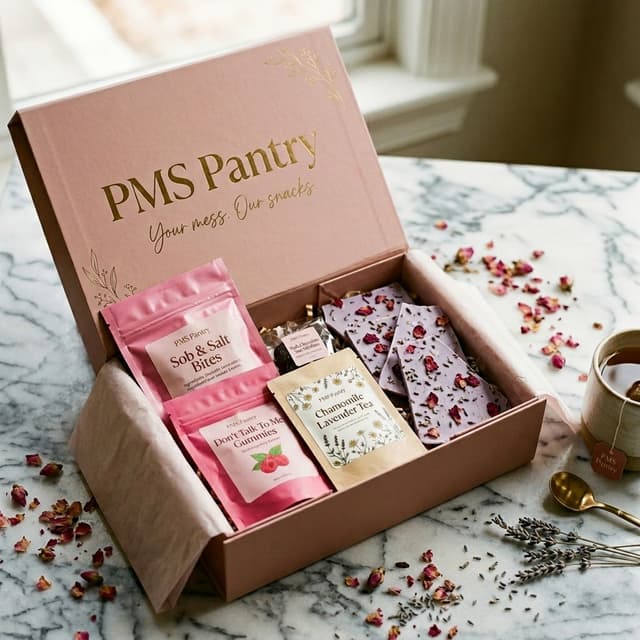
We're a snack brand. We're obviously going to tell you that eating the right things matters for PMS. But we'd be doing you a disservice if we pretended that food was the whole picture. PMS is a multi-system experience — it touches your hormones, your nervous system, your sleep, your social life, and your relationship with your own body. Managing it well requires a toolkit, not a single solution.
Here are ten interventions with actual evidence behind them — ranked roughly by how immediately actionable they are.
- 1Track your cycle seriously. Most people think they track their cycle, but they're only tracking their period dates. Tracking the luteal phase — the two weeks before your period — is where the real intelligence is. Apps like Clue, Natural Cycles, or even a simple paper calendar help you identify your personal symptom patterns. When you know that day 21 is reliably your worst day, you can plan accordingly. You don't cancel plans on day 21 anymore. You protect it.
- 2Reduce alcohol in the luteal phase. Alcohol is a depressant that disrupts serotonin production, worsens sleep quality, and increases estrogen levels. All of these effects directly amplify PMS symptoms. Even one or two drinks in the week before your period can meaningfully worsen mood symptoms and fatigue the following day. You don't have to be sober forever — just strategic about timing.
- 3Cut down on caffeine. Caffeine constricts blood vessels and increases cortisol, both of which can worsen cramps and anxiety. It also disrupts the deep sleep stages that are already compromised by hormonal fluctuations in the luteal phase. Switching to lower-caffeine alternatives (green tea, matcha) or caffeine-free options for the week before your period is one of the highest-impact diet changes for PMS.
- 4Move, but don't punish yourself. Exercise is one of the most evidence-backed interventions for PMS — but the type matters. High-intensity workouts during the late luteal phase can increase cortisol and worsen symptoms for some people. Moderate, consistent movement — a 30-minute walk, yoga, swimming, cycling at conversational pace — reduces prostaglandins, releases endorphins, and improves sleep without adding stress hormones to the mix.
- 5Prioritize sleep like it's your job. Sleep deprivation amplifies every PMS symptom. The hormonal changes in the luteal phase already disrupt sleep architecture (you spend less time in deep, restorative sleep), which means you need to be more intentional about sleep hygiene during this window. Consistent sleep and wake times, a cool room, blue light reduction after 9pm, and limiting screens in bed all have measurable impact.
- 6Heat therapy for cramps. Topical heat — a heating pad, hot water bottle, or heat patch — applied to the lower abdomen reduces uterine cramping by relaxing the smooth muscle tissue and increasing local blood flow. Studies show it's as effective as ibuprofen for mild to moderate cramping. The combination of heat and ibuprofen is more effective than either alone. This is low-tech, inexpensive, and genuinely works.
- 7Try magnesium supplementation at night. Magnesium glycinate or citrate taken at night (200–400 mg) supports muscle relaxation, improves sleep quality, and reduces PMS cramping and mood symptoms. Unlike some supplements, magnesium's effects are well-established and the research is consistent. It also has a mild calming effect that can ease the nighttime anxiety that often spikes before a period.
- 8Reduce sodium in the week before. While your body may crave salt (and we advocate for listening to those cravings intelligently), excessive processed sodium from chips, fast food, and packaged meals increases water retention and worsens bloating. The fix isn't no salt — it's better salt. Sea salt on nutrient-dense snacks rather than sodium-laden processed foods.
- 9Consider evening primrose oil. Evening primrose oil contains gamma-linolenic acid (GLA), an omega-6 fatty acid that has been shown in clinical studies to reduce breast tenderness, mood symptoms, and general PMS severity. It's one of the more underrated supplements in the PMS conversation, and the research is reasonably solid. Talk to your doctor before starting any new supplement protocol.
- 10Give yourself permission to slow down. This is the one most people resist the most. We live in a productivity culture that treats rest as laziness. But the luteal phase is biologically characterized by a natural inward pull — your body is genuinely doing more internal work, your energy metabolism is elevated, your nervous system is more sensitive. Working with that rhythm instead of against it — saying no to social commitments you don't have the bandwidth for, scheduling lighter workloads on your worst days, building in rest without guilt — is not giving up. It's intelligent management of your own system.
“PMS isn't a weakness to overcome. It's a signal to listen to. The women who manage it best aren't the ones who push through hardest — they're the ones who've learned to work with their cycle instead of against it.”
None of these interventions require a doctor's visit or a significant financial investment. Most of them require only consistency and a willingness to treat the week before your period as a time that deserves intentional care. Which it does.
Build your PMS survival toolkit
Crafted with ingredients that earn their place — because your body deserves snacks that work as hard as you do.