The worst advice you can give someone in the thick of PMS is to "eat clean" and "avoid sugar." Not because nutrition doesn't matter — it absolutely does — but because willpower is not the issue. When your brain is running low on serotonin and your uterus is in open rebellion, you need food that works, not food that punishes.
Here's what the nutrition research actually says about eating during your period — what helps, what hurts, and what the right snack actually looks like.
What to eat (and why)
Iron-rich foods
You lose iron through menstrual bleeding — anywhere from 10–80mg depending on flow. Low iron causes fatigue, brain fog, and mood changes that compound PMS symptoms. Reach for: lean red meat, lentils, spinach, pumpkin seeds, fortified cereals. Pair plant-based iron sources with vitamin C to improve absorption.
Magnesium-rich foods
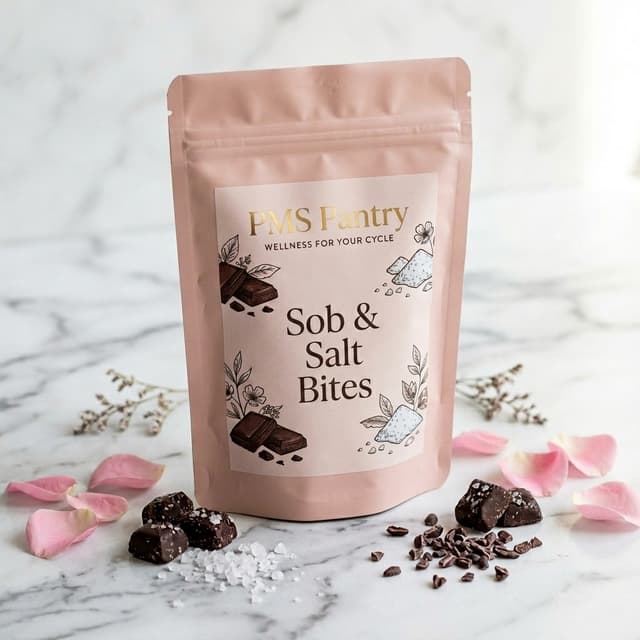
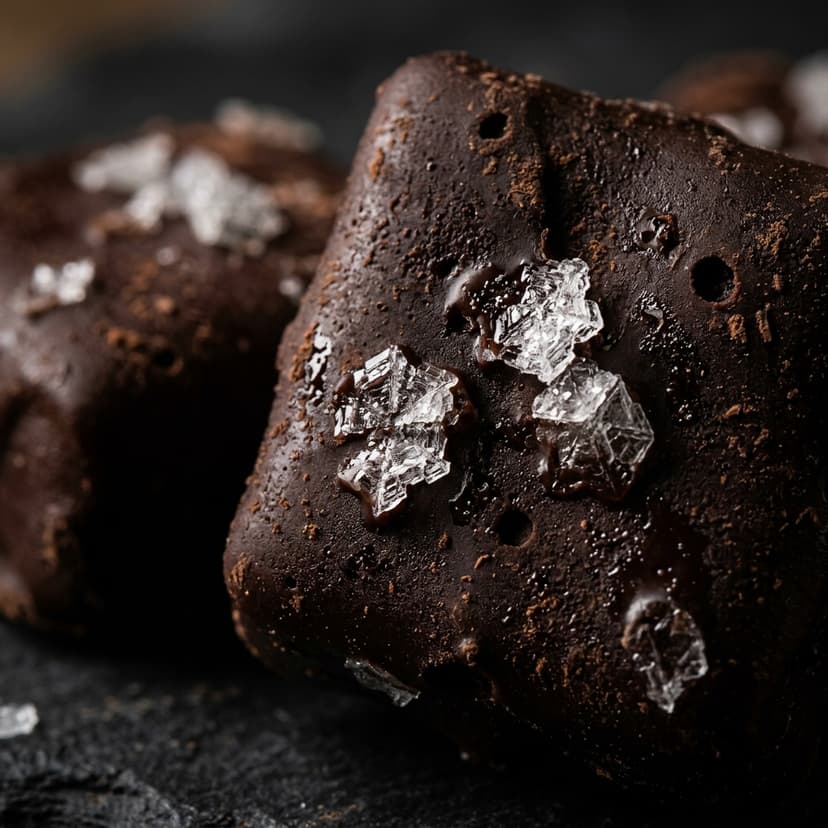
As we've covered at length: magnesium is the MVP nutrient for menstrual symptoms. Dark chocolate (70%+ cacao), almonds, pumpkin seeds, black beans, and avocado are your best food sources. For a snack that delivers meaningful magnesium in a convenient form, our Sob & Salt Bites and Break(down) Bar use bioavailable magnesium glycinate specifically for this phase.
Anti-inflammatory foods
Period cramps are caused by prostaglandins — inflammatory compounds that trigger uterine contractions. Foods high in omega-3 fatty acids reduce prostaglandin production. Good options: fatty fish (salmon, sardines), walnuts, flaxseed, chia seeds. Even a small daily serving of omega-3 rich food during your period can reduce cramp severity over 1–2 cycles.
Complex carbohydrates
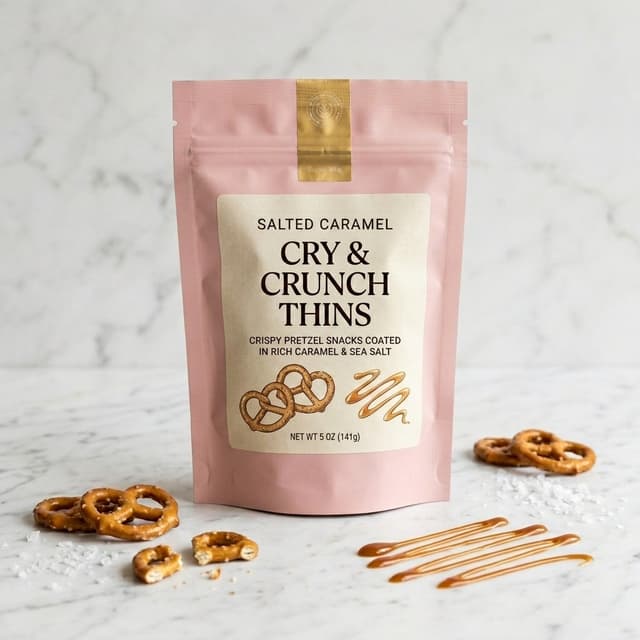
Your brain demands more glucose during the luteal phase because it's working harder to maintain neurotransmitter balance with less hormonal support. Complex carbs — oats, whole grain bread, sweet potato, brown rice — provide a steady glucose stream without the sugar spike-and-crash that worsens mood swings. Our Cry & Crunch Thins are built on whole wheat precisely for this reason.
Calcium + Vitamin D
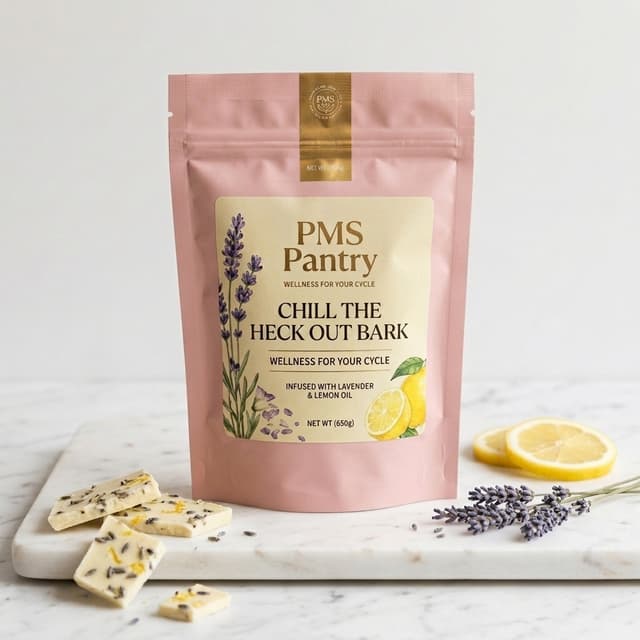
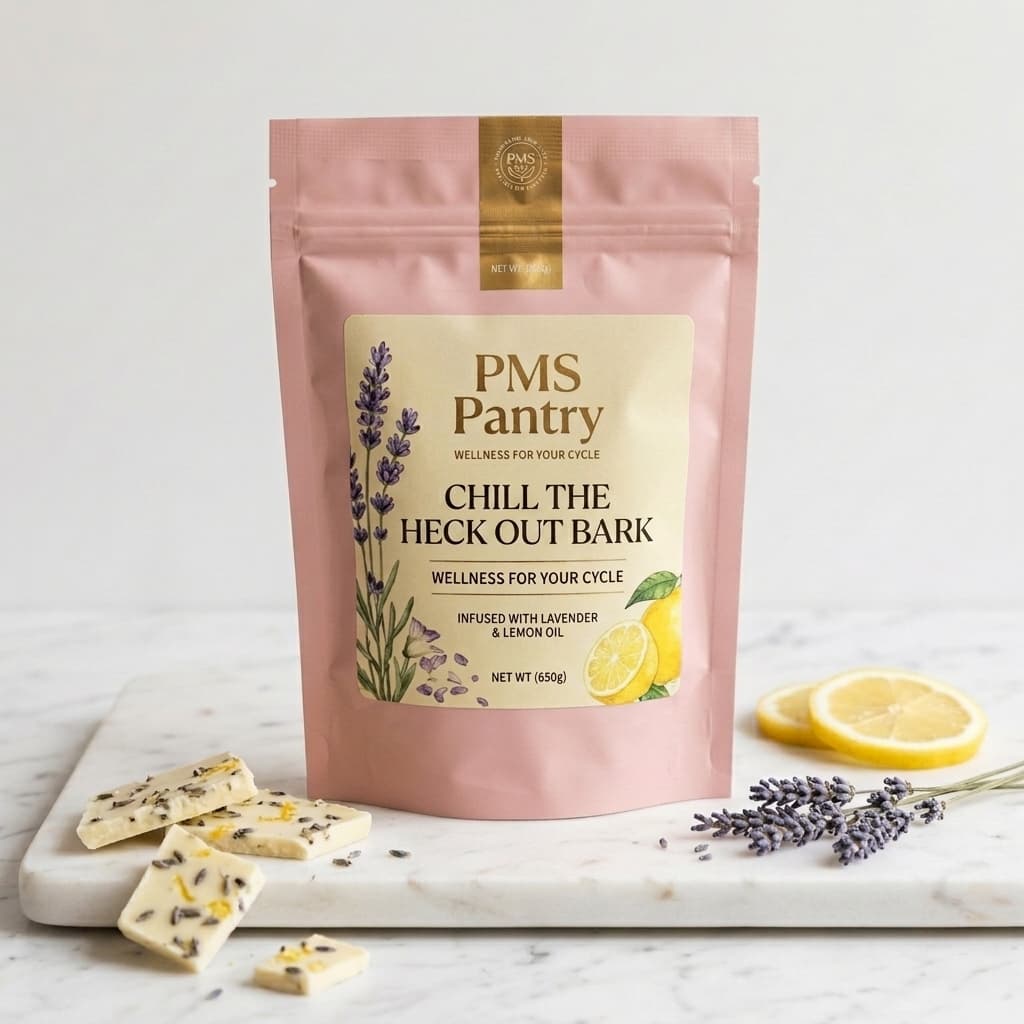
Multiple clinical trials have shown that 1200mg/day of calcium significantly reduces PMS symptoms — especially mood-related ones. Vitamin D enhances calcium absorption and has its own anti-inflammatory properties. Our Chill the Heck Out Bark was formulated specifically around this pairing: white chocolate base delivering calcium carbonate and Vitamin D3.
What to avoid (or minimize)
- High-sodium foods — worsen water retention and bloating
- Alcohol — depletes magnesium and B vitamins, disrupts sleep, increases inflammation
- Excess caffeine — stimulates cortisol production, increases anxiety, interferes with iron absorption
- Refined sugar — causes blood sugar spikes that amplify mood swings
- Processed seed oils — high in omega-6s, which are pro-inflammatory
You don't have to avoid all of these perfectly. The goal is directional: more of the good stuff, a little less of the things that make symptoms worse.
What makes a genuinely good period snack
The best period snack does three things simultaneously: it satisfies a craving (so you actually eat it), it delivers a meaningful dose of a symptom-supporting nutrient (so it does something), and it doesn't make anything worse (no blood sugar crash, no inflammatory ingredients).
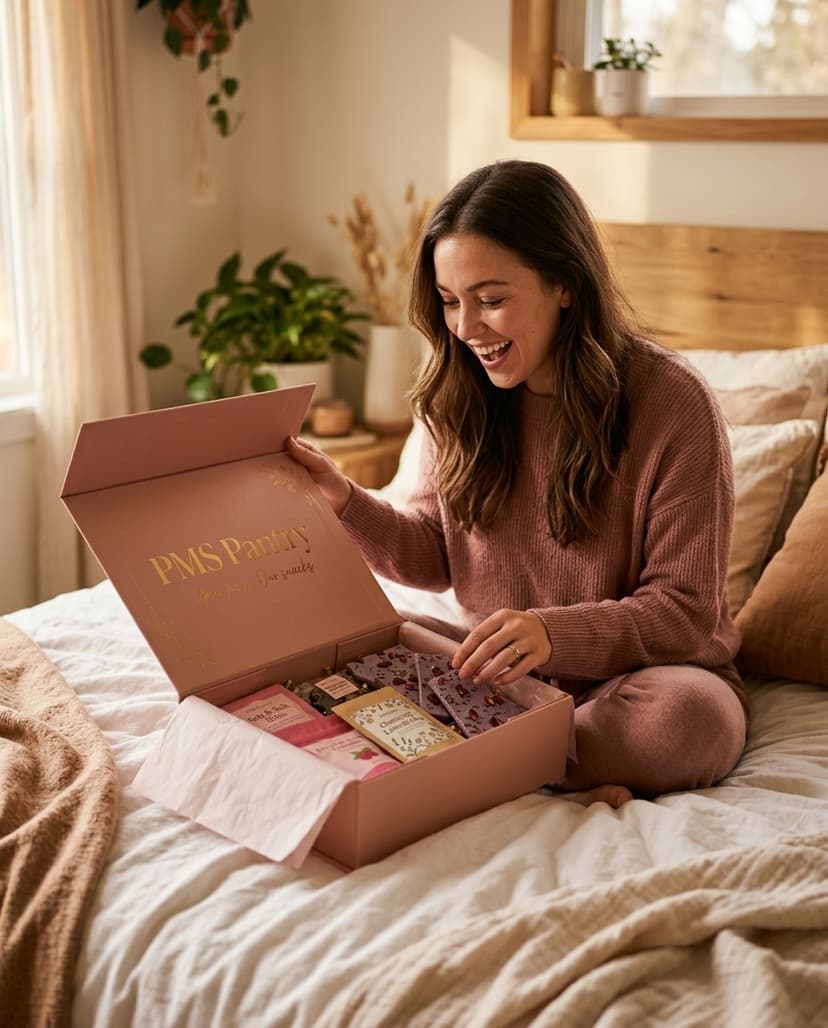
That's a harder brief than it sounds. Most "wellness" snacks nail one or two. PMS Pantry was built specifically to hit all three for every product in our lineup.
- Sob & Salt Bites: satisfies chocolate + salt cravings + delivers magnesium bisglycinate
- Don't Talk To Me Gummies: satisfies the sweet craving + delivers Vitamin B6 for serotonin support
- Chill the Heck Out Bark: satisfies creamy/sweet cravings + calcium + Vitamin D for mood regulation
- Cry & Crunch Thins: satisfies crunchy/savory cravings + zinc + B12 for immune support and energy
- Not Today, Hormones Tea: soothes the nervous system + chamomile for cramps + passionflower for sleep
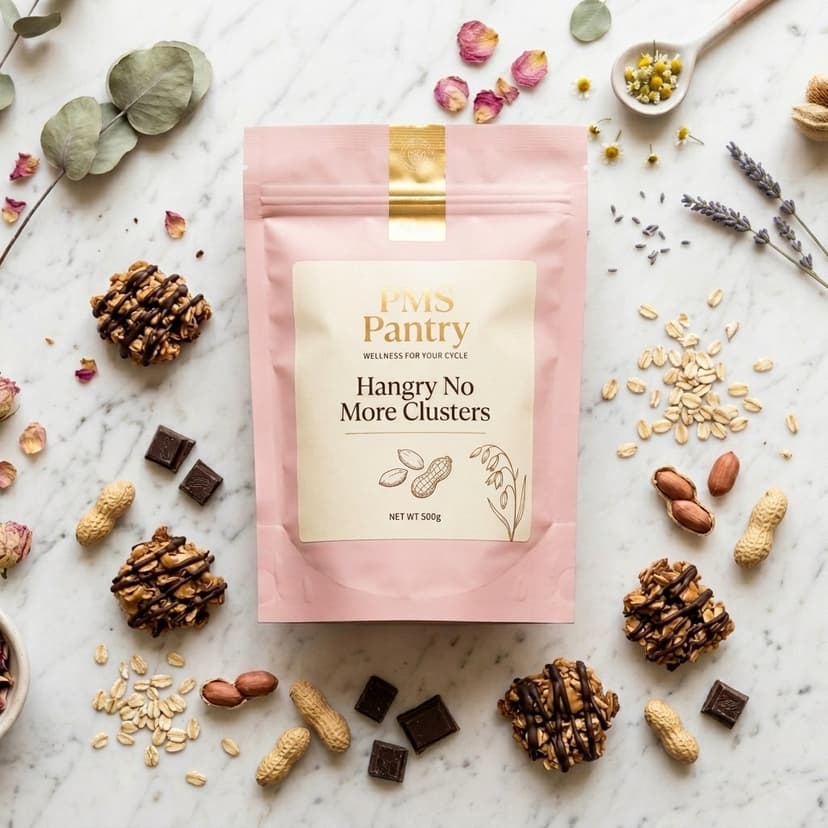
- Hangry No More Clusters: satisfies hunger + protein + fiber + flaxseed for hormonal balance
The snack timing question
You don't have to wait until you're in pain to start. The most effective nutritional support for menstrual symptoms comes from consistent intake in the week before your period — the late luteal phase. Think of it as filling the tank before the demand spikes, not scrambling to refuel after it's already empty.
“The right snack doesn't just taste good. It does something. That's the whole premise — and it's the standard we hold every product to.”
— PMS Pantry
Shop the snacks nutritionists recommend
Crafted with ingredients that earn their place — because your body deserves snacks that work as hard as you do.