
If you could only do one thing to support your PMS symptoms, the research points to one answer more than any other: fix your magnesium. Magnesium deficiency is pervasive — estimated to affect over 50% of adults in the United States — and in women with PMS, the deficiency is often even more pronounced. The connection isn't coincidental.
What magnesium does in your body
Magnesium is involved in over 300 enzymatic reactions in the human body. For your cycle specifically, it does several critical things:
- Relaxes smooth muscle tissue — including the uterine wall that contracts during cramps
- Regulates the nervous system — low magnesium increases cortisol and anxiety
- Supports serotonin synthesis — magnesium is a cofactor in converting tryptophan to serotonin
- Reduces inflammation — magnesium acts as a natural calcium channel blocker, reducing inflammatory prostaglandins
- Improves sleep quality — low magnesium is directly correlated with sleep disruption
Every one of those functions maps directly onto common PMS symptoms: cramps, anxiety, mood swings, inflammation, and poor sleep. Magnesium doesn't just address one symptom — it addresses the underlying biochemistry driving several of them simultaneously.
The clinical evidence
This isn't wellness industry speculation. The research on magnesium and PMS is some of the strongest in the nutritional sciences:
- 1A 2012 study in the Journal of Midwifery & Women's Health found magnesium supplementation reduced menstrual pain as effectively as ibuprofen
- 2A 2010 double-blind trial found that 250mg of magnesium oxide per day significantly reduced PMS mood symptoms (anxiety, depression, mood swings) vs. placebo
- 3Multiple studies have found that women with PMS have significantly lower red blood cell magnesium levels than women without PMS
- 4Combining magnesium with Vitamin B6 has shown additive effects on PMS symptom reduction in several trials
Women with PMS have measurably lower magnesium levels than women without PMS. It's not a mindset difference. It's a biochemical one.
Magnesium glycinate vs. magnesium oxide vs. magnesium bisglycinate
Not all magnesium supplements are equal. The form matters enormously for both absorption and tolerability:
- Magnesium oxide — the cheapest and most common form; only about 4% is absorbed. Causes digestive upset. Avoid.
- Magnesium glycinate — bound to glycine (an amino acid). Highly bioavailable, gentle on the stomach, supports sleep and relaxation. Best for PMS.
- Magnesium bisglycinate — the chelated form of glycinate. Even higher bioavailability. The gold standard for cycle support.
- Magnesium citrate — decent absorption; often used for constipation relief. Can cause loose stools at higher doses.
- Magnesium malate — good bioavailability; particularly helpful for fatigue and muscle pain.
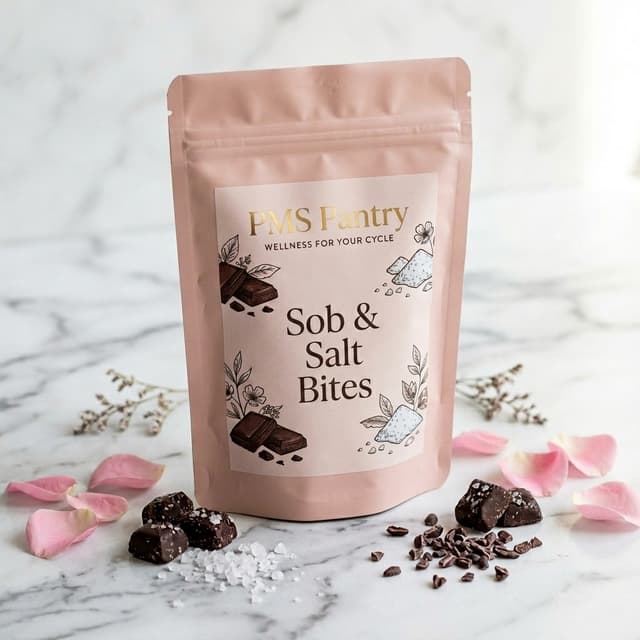
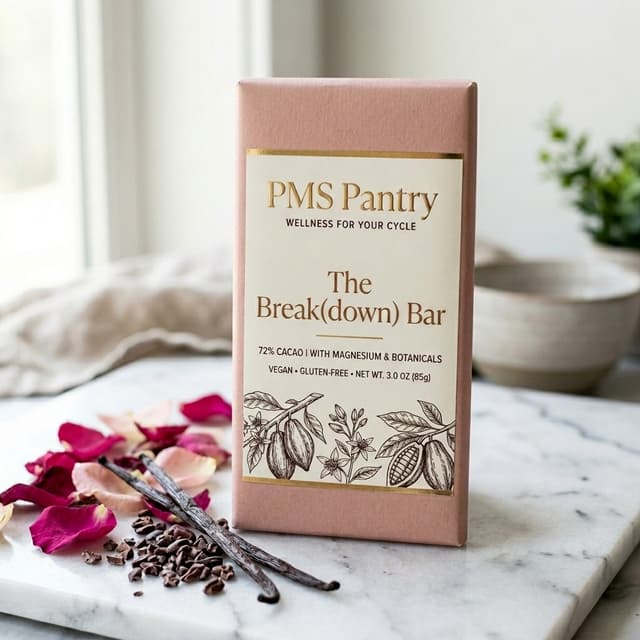
Our Sob & Salt Bites use magnesium bisglycinate — the most bioavailable form — specifically because we wanted the magnesium to actually reach your cells, not pass through your digestive system unused. The Break(down) Bar uses magnesium glycinate for the same reason.
When and how much to take
For PMS specifically, research suggests timing your higher magnesium intake to the luteal phase — the two weeks before your period. This is when your body depletes it fastest and when symptoms are building.
- Daily target: 300–400mg of elemental magnesium (from food + supplements combined)
- Best timing: evening, as magnesium supports sleep quality
- With food: magnesium is better absorbed when taken with meals
- Build up gradually: start with 100–150mg and increase over 1–2 weeks
- Cycle specifically: increase intake during days 14–28 of your cycle
Food sources of magnesium
You can meaningfully supplement your magnesium through food — especially if you're already eating a varied diet. The best sources:
- Dark chocolate (70%+ cacao) — 228mg per 100g
- Pumpkin seeds — 262mg per 100g
- Almonds — 270mg per 100g
- Spinach — 79mg per 100g
- Black beans — 70mg per 100g
- Avocado — 29mg per 100g
“Magnesium isn't a trend. It's one of the most studied, most evidence-backed nutrients for menstrual health. The only question is whether you're getting enough of it — and in the right form.”
— PMS Pantry
Get bioavailable magnesium in every bite
Crafted with ingredients that earn their place — because your body deserves snacks that work as hard as you do.