We spend a lot of time at PMS Pantry talking about optimizing your cycle — the right nutrients, the right snacks, the science behind what you're experiencing. But there's a conversation that underpins all of that, and it's one we can't ignore: for millions of people in the United States, the baseline isn't snack optimization. It's having enough pads to get through the week.
Period poverty — the inability to access menstrual hygiene products due to financial constraints — is more widespread than most people realize. A 2019 study found that one in five students in the U.S. had struggled to afford menstrual products. One in three women living below the federal poverty line reported being unable to afford them in the previous year. And 35 states still tax menstrual products as luxury goods.
What Period Poverty Actually Looks Like
The consequences aren't abstract. Students miss school. Workers miss shifts. People improvise with toilet paper, rags, or simply stay home, risking their income or their education, because they don't have the means to manage a biological reality they never chose.
Period poverty intersects with housing insecurity (homeless shelters frequently run out of menstrual supplies), food insecurity (SNAP benefits cannot be used to purchase menstrual products), incarceration (access to menstrual products in correctional facilities is often inadequate and humiliating), and age (teens and college students are disproportionately affected due to limited independent income).
“Menstruation is not a lifestyle choice. Access to menstrual products is a basic health need — not a luxury, not a personal problem.”
Why the Tax Issue Matters
In 35 states, menstrual products are subject to sales tax because they're categorized as non-essential luxury items — a categorization that dates to eras when tax codes were written almost exclusively by men. In contrast, many of these same states exempt products like Rogaine, dandruff shampoo, and gun club memberships. The "tampon tax" raises roughly $150 million annually across the states that levy it. It's a relatively small amount of government revenue that carries an outsized symbolic and practical burden for the people who pay it.
- 15 states and D.C. have eliminated the tampon tax as of 2026
- Several states exempt other medical necessities but not menstrual products
- Low-income individuals disproportionately bear the cost of the tax as a percentage of income
What You Can Do
If this makes you angry — good. Here's where to direct it.
- 1Donate to local mutual aid organizations, women's shelters, and food banks — most actively need menstrual product donations.
- 2Support organizations like PERIOD. (the nonprofit), Happy Period, and Aunt Flow that work directly on product access and policy advocacy.
- 3Contact your state representatives about repealing the tampon tax if your state still levies it. It takes five minutes and it matters.
- 4Buy extra when you can afford to, and keep a supply to give away. Many community fridges and Little Free Libraries have expanded to include period products.
- 5Talk about it. Period poverty persists partly because menstruation is still considered embarrassing to discuss. The more we normalize the conversation, the harder it is to ignore the inequity.
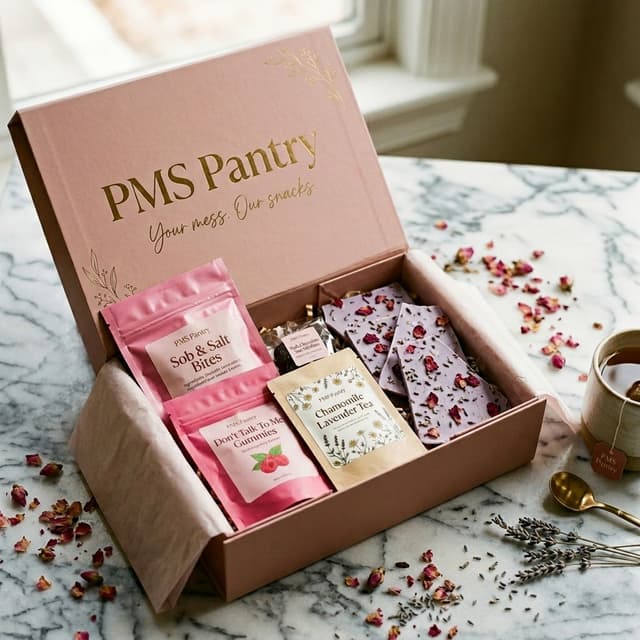
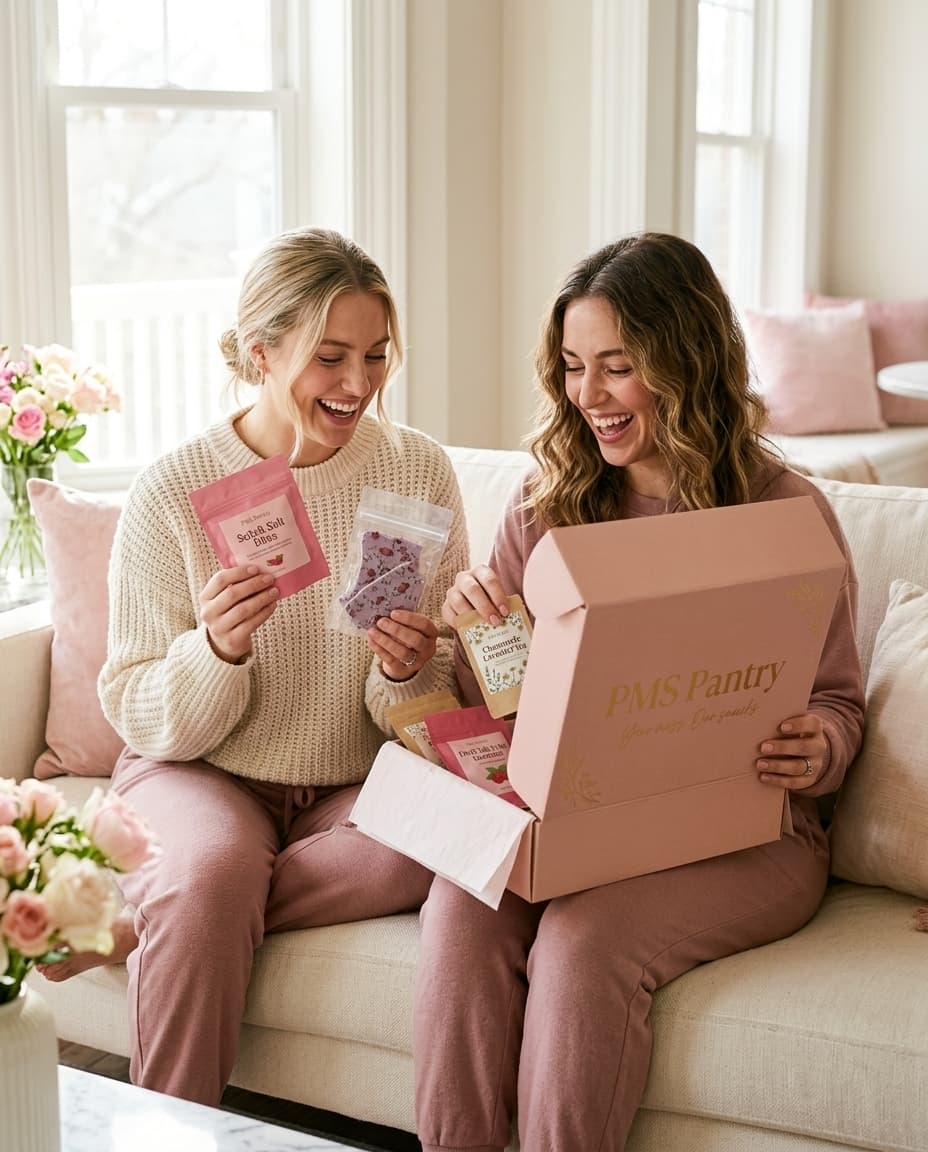
At PMS Pantry, we donate a portion of every Hot Mess Express Box purchase to period equity organizations. Because access to care — whether it's snacks or supplies — should never depend on your zip code.
Every purchase supports period equity
Crafted with ingredients that earn their place — because your body deserves snacks that work as hard as you do.